
Marshall County Criminal History Checks
No one file is a complete Marshall County criminal history. The sheriff roster is the quickest place to check a recent county booking, while the clerk's case file shows what charge was filed and how the court acted. A city police report stays with the city that created it. ALEA's fingerprint record serves a different purpose: it joins arrest cycles with outcomes reported to the Alabama repository. Begin with the event at issue, then follow it through custody, court, and state records.
Gather the full name, spelling variants, an approximate event date, and any booking or case number. A date of birth can help distinguish similar names when an official form lawfully asks for it. Then use this sequence:
- Search the sheriff's Current, Released, and Archived roster views for a county booking.
- Identify the arresting agency and court venue instead of assuming every Marshall County record is held by the sheriff.
- Search the clerk's public terminal or Alabama Just One Look for the filed case and later docket events.
- Request the police narrative, official booking copy, or certified disposition from the office that created it.
- For a personal statewide review, compare those records with the fingerprint-based ALEA CHRI response.
Two Marshall County Court Counters
Marshall County criminal records have a two-city courthouse geography. The main Circuit Clerk counter is at 424 Blount Avenue, Suite 201, Guntersville, and the second counter is at 133 South Emmett Street in Albertville. Both publish weekday hours from 8:00 a.m. to 4:30 p.m. Guntersville also offers a free public-access computer for court-record searches, a useful local option when the paid online service is not a good fit.
Guntersville Clerk
424 Blount Avenue, Suite 201
Guntersville, AL 35976
256-571-7785
Albertville Clerk
133 South Emmett Street
Albertville, AL 35950
256-878-4521
The Marshall County government portal shows the county offices and their place in local government.
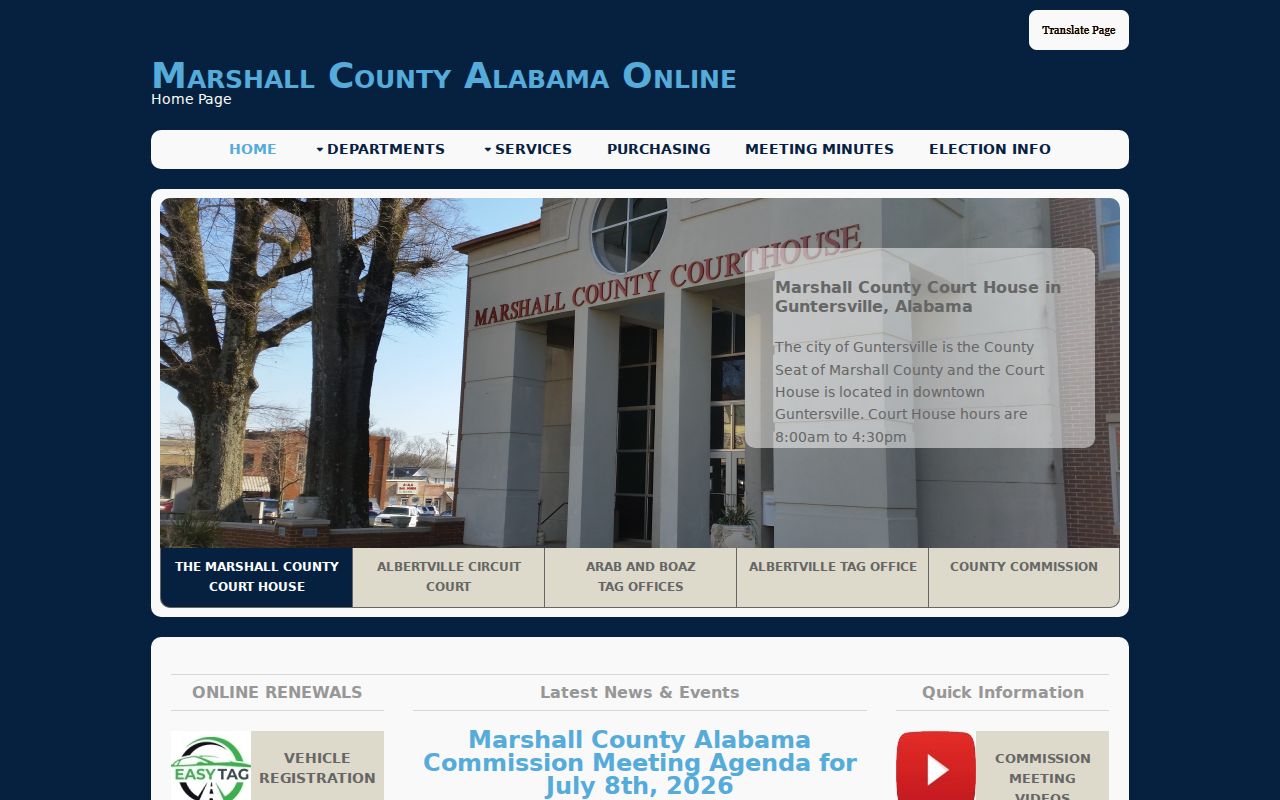
The portal helps route general county business, but police, jail, and court records still go to their actual custodians.
Counter staff may explain procedure, provide schedules, give information from a requester's file, and supply available form samples. They cannot choose a legal strategy, draft a filing, predict a result, contact a judge privately, or alter a signed order. Before a trip, confirm parking, security, recording, and archive-retrieval rules because the official court pages do not publish all of those details.
Official Background Checks in Alabama
The Alabama Law Enforcement Agency, State Bureau of Investigation, Criminal Justice Information Services Division maintains the state's fingerprint and criminal-history files. Its Alabama Background Check System is limited to statutorily qualified subscribers. It is not an open name search for the public. Any person may instead request review of their own Alabama Criminal History Record Information with fingerprints, a current photo ID, the ALEA form, and payment by cashier's check or money order.
| Official product | Coverage | Published channel |
|---|---|---|
| ALEA personal CHRI | Fingerprint-supported Alabama history | $25 first copy; $5 extra copy |
| Marshall court file | One District or Circuit prosecution | Free clerk terminal or paid online search |
| FBI Identity History Summary | Subject's FBI fingerprint response | Electronic or mail request |
Coverage determines which product fits a self-review. The Marshall clerk search exposes case-level filings and docket events but does not recreate a statewide rap sheet. ALEA organizes fingerprint-supported Alabama history but does not reproduce every police narrative or court document. An FBI Identity History Summary can include federal and contributing-state fingerprint information beyond Alabama. Comparing the correct products is more reliable than treating any one no-result as proof that no record exists. Older, restricted, or not-yet-reported information can also explain a gap.
The ABC portal illustrates the restricted statewide product.
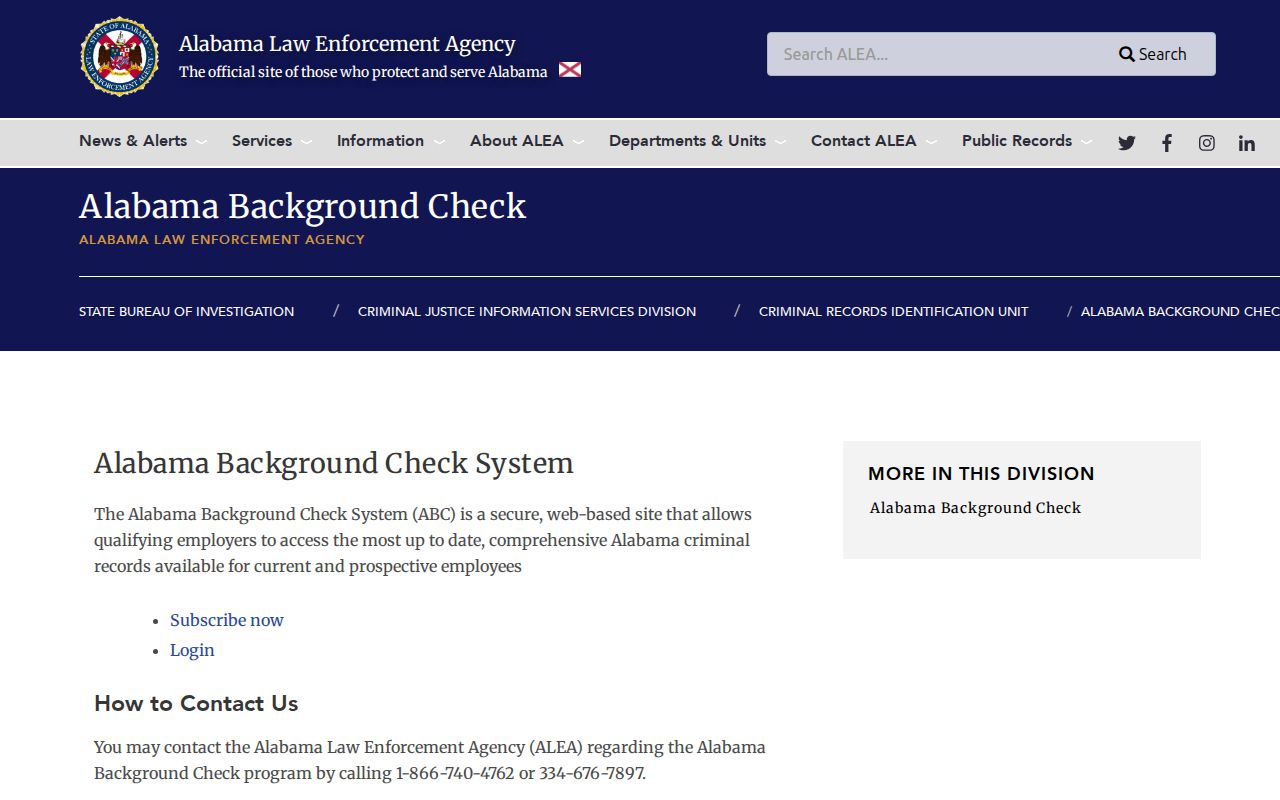
For most residents reviewing their own record, the fingerprint application is the proper ALEA route.
Reviewing Your Own ALEA Record
The ALEA personal CHRI instructions call for an original FBI FD-258 fingerprint card. A law-enforcement agency or other fingerprint service may take the prints, but local availability and cost should be confirmed first. The packet also needs a copy of current photo identification. Mail goes to the Criminal Records and Identification Unit in Montgomery, or it may be hand delivered at ALEA's South Ripley Street location.
The application asks for names and aliases, birth information, address and contact data, the reason for review, signature, date, and identity certification. Social Security number is marked optional on current versions. The returned state record can then be compared with a certified court disposition. If an outcome is missing or wrong, preserve both records and start the correction with the agency or clerk that originated the disputed data.
The ALEA review page shows the official self-review path.
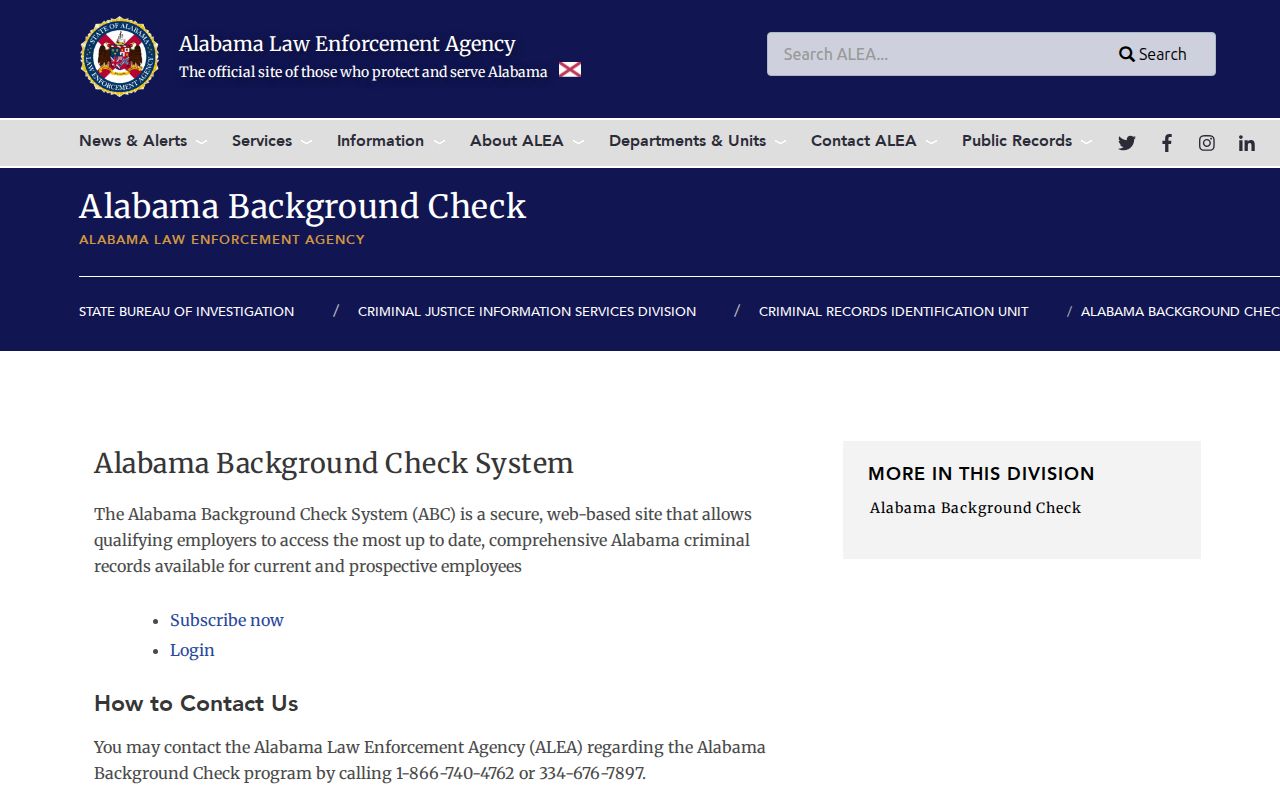
This process produces an official personal state record, not every narrative or pleading kept in Marshall County.
Kinds of Criminal Records
Marshall County criminal records describe different stages of one event. The responding sheriff or city police department creates the incident and arrest reports. The jail creates booking and release data. A magistrate or clerk records warrants, complaints, hearings, orders, and the final disposition. ALEA links fingerprint-supported arrest cycles to outcomes reported into the state system. ADOC and ABPP add prison, probation, and parole information later.
- Incident and arrest reports: agency narratives, circumstances, allegations, and arrest authority.
- Booking records: intake number, date, charge label, bond, custody, and release activity.
- Court files: filed charges, docket events, pleas, orders, disposition, and sentence.
- Repository records: fingerprint-linked Alabama arrest cycles and reported outcomes.
- Custody and supervision records: county jail, ADOC, community corrections, probation, or parole status.
Marshall County Roster Search Paths
The Marshall County inmate roster has Current, Released, and Archived views. A name search accepts either a first or last name. Users may sort by name or date, reverse the date order, show all entries, move through pages, and open a profile. The result can display a photograph, name, booking number, age, booking date, release date, initial charge labels, and sometimes bond information.
| Roster control | Use | Limit |
|---|---|---|
| Current / Released / Archived | Changes custody time frame | Totals change continuously |
| Search By Name | First or last name | Partial matching is not promised |
| Newest / Oldest | Orders booking dates | Not a court chronology |
| View Profile | Opens booking detail | Still a convenience record |
The sheriff expressly warns that roster material is not its official record. A complete Marshall County arrest search follows the roster entry to the agency report and then the court file.
Marshall County Criminal Records: What They Contain
A Marshall County criminal record must be read in context. Identifiers help match the correct person, but public copies may redact full birth dates, Social Security numbers, victim details, medical data, and protected addresses. Booking data shows intake, not guilt. A case file is the best source for filed charges and disposition. A state CHRI is a repository summary rather than a copy of every local document.
| Name and identifiers | Published name, aliases, limited birth data, and agency identifiers where releasable. |
|---|---|
| Arrest and booking | Agency, date, booking number, initial allegation, bond, release, or transfer. |
| Court charge | Complaint or indictment, code, class, court, case number, and filing date. |
| Disposition | Conviction, dismissal, acquittal, nolle prosequi, no bill, or another outcome. |
| Sentence | Custody, probation, community corrections, costs, restitution, and court orders. |
| Later status | ADOC custody, release, ABPP supervision, or expungement action when reported. |
When Marshall County Charges Change
A roster label captures the booking stage. It may use shorthand, list an arrest warrant, or reflect what officers knew during intake. The prosecutor can file a different charge, a grand jury can return a true bill or no bill, and the court can later dismiss, accept a plea, acquit, or sentence. A charge that seems to vanish between booking and court may have changed venue, not yet been filed, been filed under a different case number, or reached a restricted status.
The local flow is: incident or arrest report → jail booking → District or Municipal complaint → grand jury for a felony → Circuit Court after indictment → disposition and sentence → reporting to ALEA. For a reliable outcome, request a certified disposition from the Circuit Clerk. Do not treat a released roster entry as proof that the charge ended.
Alabama Public Access Laws
The Alabama Open Records Act gives citizens a general right to inspect and copy public writings, but other laws restrict criminal-history dissemination and confidential records. The custodian must apply the rules to each request. Active-investigation material, juvenile and youthful-offender matters, victim information, medical facts, account identifiers, sealed cases, and expunged records can be withheld or redacted.
Key Alabama statutes:
Code §§ 36-12-40 and 36-12-41 provide public-writing inspection and certified-copy rights subject to law and fees.
Code § 41-9-590 et seq. governs Alabama criminal-justice information access, use, and dissemination.
Code § 15-27-1 et seq. controls Alabama expungement eligibility and procedure.
Code § 15-20A-1 et seq. governs sex-offender registration and community notification.
The official Code of Alabama portal supplies the current statutory text.
Current code text matters because eligibility, exceptions, and duties can change.
Marshall County Warrant Checks
Marshall County does not promise a full public warrant name search. The clerk states that an unserved arrest warrant is not public and directs a person checking for one to appear at the Sheriff's Office. The official most-wanted list is selective, so absence there proves nothing. A bench or failure-to-appear warrant may also be tied to a court docket rather than a public sheriff list.
For a new misdemeanor complaint outside a municipality, first make an incident report with the sheriff. The county magistrate's public window is Tuesday from 8:00 a.m. to 3:00 p.m., and no application charge is published. City events start with the city police and municipal magistrate. To resolve an existing warrant, verify the issuing court, bond or surrender directions, and whether the warrant was recalled. Keep the court's written action after resolution.
A warrant record can mean an arrest warrant issued from a complaint, a bench warrant after a missed date, a capias tied to noncompliance, or felony process. Each has its own court source. Sheriff deputies may track service, but the issuing clerk or magistrate is the best place to confirm the court, current status, and written recall. Restricted and investigative warrants may not be disclosed.
Restricted, Sealed & Expunged Records
Alabama expungement under Code § 15-27-1 et seq. can cover specified nonconviction records and defined conviction categories when all statutory conditions are met. Eligibility depends on the exact charge, outcome, waiting period, prior history, and court obligations. Serious violent, sex, and other listed offenses face exclusions. A jail label alone cannot answer eligibility. Start with a certified disposition for each charge.
The petition is filed in circuit court where the charge was filed. Marshall County applicants use form CR-65 and should confirm the current packet with either clerk counter. Judicial materials report a $500 administrative filing fee per case plus applicable costs. The packet calls for certified ALEA history and arrest or disposition records, notice to the prosecutor and agencies, and a 45-day objection period. A hardship affidavit may address prepayment when the law allows, but relief remains a court decision. After an order, track updates with every named custodian.
Marshall County Custody Has Layers
County jail custody, state prison custody, and federal custody use separate systems. The Marshall County roster covers local pretrial and short-term bookings. The ADOC Inmate Search covers people in Alabama Department of Corrections custody. The Federal Bureau of Prisons locator covers federal custody. A missing result in one system says nothing about the other two.
The ADOC search interface is the official state-prison layer.
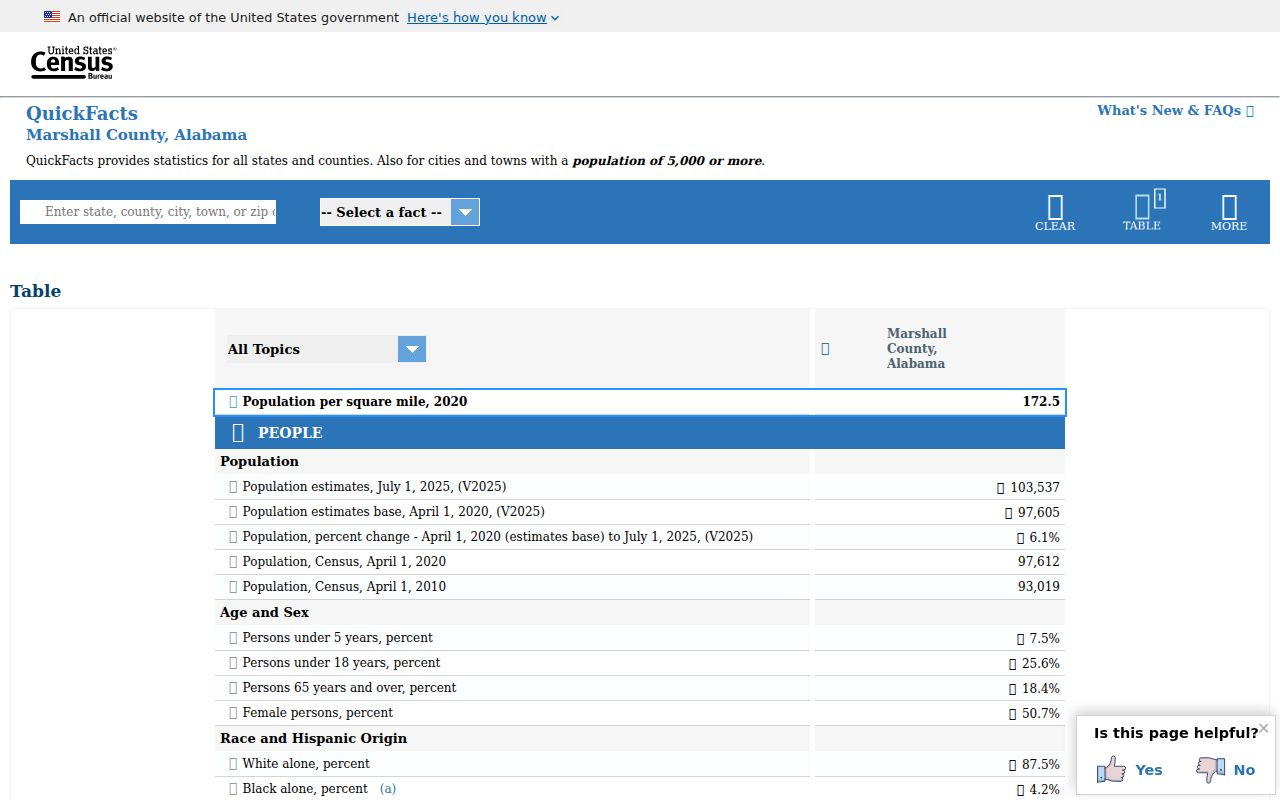
For supervision after court, the Alabama Bureau of Pardons and Paroles and Marshall County Community Corrections serve different roles.
The ABPP portal describes state probation, parole, and board functions.
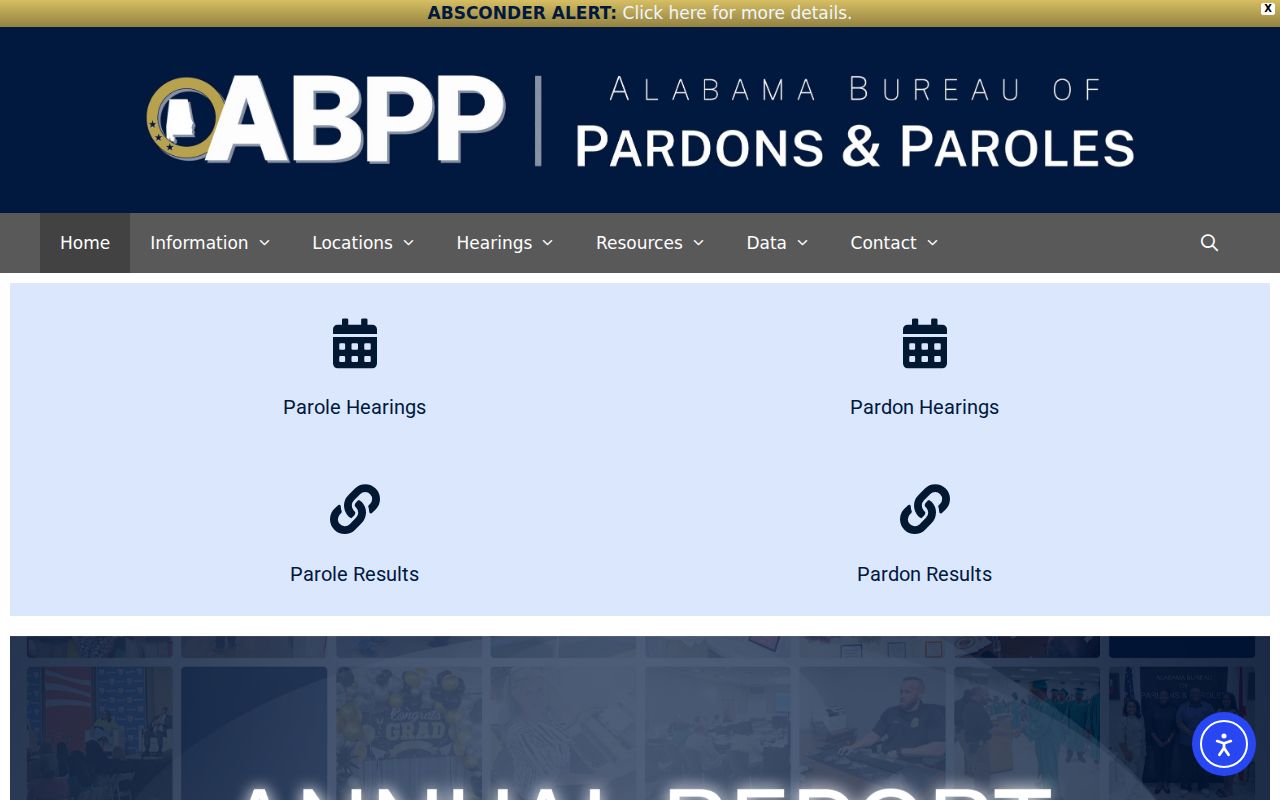
Marshall County's Guntersville field office is in the courthouse, while the Sand Mountain DRC Lite and community-corrections work is centered in Albertville.
Reading Marshall County Record Terms
Short docket and roster labels can hide major differences. Read the full court entry before drawing a conclusion, especially when the jail charge and filed charge do not match.
- Disposition
- The way a charge ended, such as conviction, dismissal, acquittal, or nolle prosequi.
- True bill
- A grand jury indictment. It is an accusation, not a conviction.
- No bill
- The grand jury did not indict that submission.
- FTA
- Failure to appear, which may lead to a warrant or booking label.
- Capias
- A court command to take a person into custody, often for failure to appear or comply.
City-by-City Criminal Records in Marshall County
City police departments create their own incident and arrest reports, while municipal courts keep city ordinance, traffic, and misdemeanor cases. Albertville, Boaz, and Guntersville therefore need their own starting points. A felony or county case can later move into the Marshall County District and Circuit system, and a city arrest can appear in the county jail roster, but those later records do not replace the city source.
Albertville Record Check
23,710 · Police records lobby, city jail functions, and Tuesday Municipal Court dockets.
Boaz Record Check
10,619 · Upstairs police records counter and Thursday Municipal Court dockets.
Guntersville Record Check
9,394 · City police and court records beside the county-seat records cluster.
Marshall County Federal Record Layer
Federal records are separate from Alabama and Marshall County criminal records. Marshall County lies in the Northern District of Alabama, and federal dockets are searched through PACER. The FBI Identity History Summary is a subject-only fingerprint response through the FBI electronic or mail channel. It is not an open search for another person. Federal Bureau of Prisons custody is also distinct from the county jail and ADOC.
The FBI electronic identity history portal shows the personal federal request route.
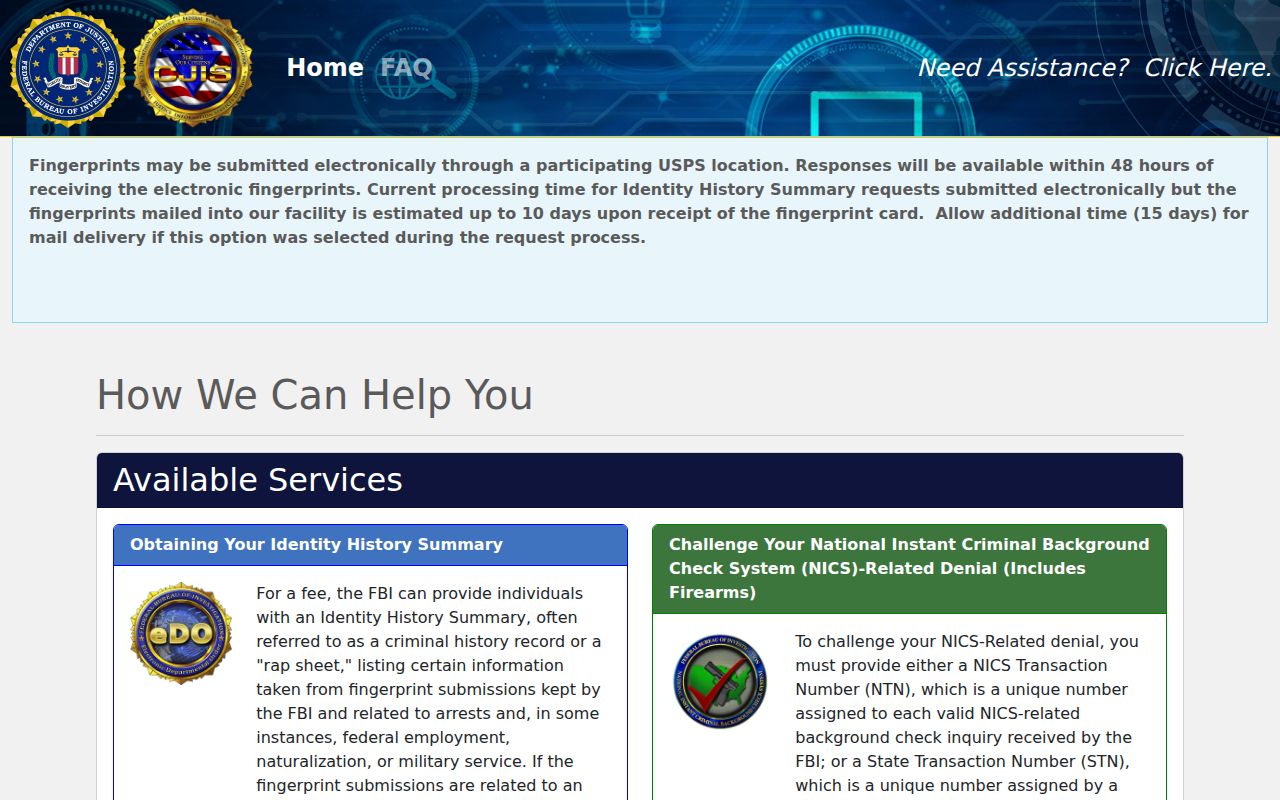
Use PACER for a federal case, BOP for federal custody, and FBI EDO for one's own fingerprint history.